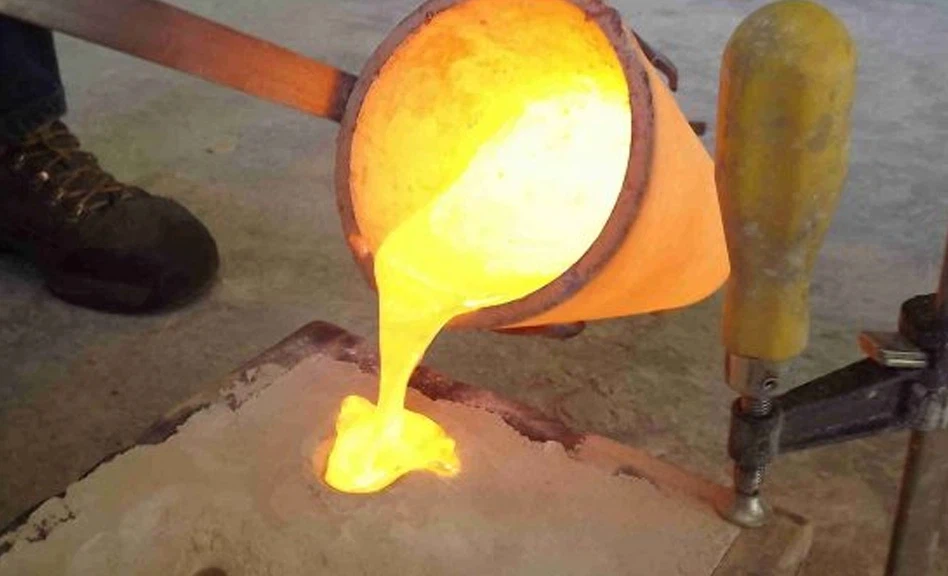
Forging is a manufacturing process that involves the shaping of metal using localized compressive forces. As a forging supplier, I've witnessed firsthand how forging can significantly influence the grain structure of materials, which in turn affects the mechanical properties of the final product. In this blog post, I'll delve into the ways in which forging impacts the grain structure and why it's crucial for various industries.
Understanding Grain Structure in Metals
Before we explore the effects of forging on grain structure, it's essential to understand what grain structure is. Metals are composed of tiny crystals called grains. These grains are formed during the solidification process of the metal. Each grain has a specific orientation of its atomic lattice, and the boundaries between these grains are known as grain boundaries.
The size, shape, and orientation of these grains play a vital role in determining the mechanical properties of the metal. For instance, smaller grain sizes generally result in higher strength, better ductility, and improved resistance to fatigue and corrosion. On the other hand, larger grain sizes can lead to reduced strength and increased brittleness.
How Forging Affects Grain Structure
Grain Refinement
One of the most significant effects of forging on the grain structure is grain refinement. During the forging process, the metal is subjected to high-pressure forces that cause the grains to deform. This deformation breaks the existing grains into smaller ones, resulting in a finer grain structure.
Grain refinement occurs through a process called recrystallization. When the metal is deformed, it accumulates internal stresses. If the metal is then heated to a specific temperature (the recrystallization temperature), new strain - free grains begin to form. These new grains are smaller in size compared to the original ones. The forging process can be carefully controlled to ensure that recrystallization occurs at the right time and temperature, leading to a more uniform and refined grain structure.
A finer grain structure offers several advantages. It enhances the strength of the material because the smaller grains act as barriers to the movement of dislocations (defects in the atomic lattice). This makes it more difficult for the material to deform under stress, resulting in higher strength and hardness. Additionally, a finer grain structure improves the ductility of the metal, allowing it to be bent or stretched without fracturing.


Grain Orientation
Forging also has a significant impact on the orientation of the grains. When the metal is forged, the grains are aligned in a specific direction based on the direction of the applied force. This is known as grain flow.
Grain flow can be beneficial in many applications. For example, in components that are subjected to unidirectional loads, such as shafts or connecting rods, having the grains aligned in the direction of the load can significantly improve the mechanical properties. The aligned grains provide a more continuous path for the transfer of stress, reducing the likelihood of crack initiation and propagation.
In contrast, if the grain orientation is not properly controlled, it can lead to anisotropic properties. Anisotropy means that the material's properties vary depending on the direction in which they are measured. This can be a problem in applications where uniform properties are required.
Types of Forging and Their Impact on Grain Structure
Open Die Forging
Open Die Forging is a process in which the metal is shaped between two flat or simple - shaped dies. In open die forging, the metal is deformed incrementally, and the grains are elongated and aligned in the direction of the forging force. This results in a grain structure that is highly directional, with long, parallel grains.
Open die forging is often used for large - scale components where a high degree of strength and toughness is required. The elongated grain structure provides excellent mechanical properties in the direction of the grain flow, making it suitable for applications such as axles, shafts, and large structural components.
Closed Die Forging
Closed Die Forging involves the use of dies that completely enclose the metal. The metal is forced to fill the shape of the die cavity, resulting in a more complex and precise shape. In closed die forging, the grains are not only refined but also conform to the shape of the die.
The grain structure in closed die forgings is generally more uniform compared to open die forgings. The metal is subjected to high - pressure forces from multiple directions, which helps to break up the grains and create a more homogeneous structure. Closed die forgings are commonly used in applications where high precision and good mechanical properties are required, such as automotive parts and aerospace components.
Cold Forging
Cold Forging is a forging process that is carried out at room temperature or slightly above. In cold forging, the metal is deformed without the use of heat, which results in a different grain structure compared to hot forging.
During cold forging, the grains are severely deformed without the opportunity for recrystallization to occur immediately. This leads to a highly deformed and work - hardened grain structure. The work - hardening effect increases the strength and hardness of the material but reduces its ductility. Cold forging is often used for producing small, high - precision components such as fasteners and gears.
Importance of Controlling Grain Structure in Forging
Controlling the grain structure in forging is crucial for several reasons. First, it allows us to tailor the mechanical properties of the final product to meet the specific requirements of the application. For example, in the aerospace industry, components need to have high strength, low weight, and excellent fatigue resistance. By carefully controlling the grain structure through forging, we can produce parts that meet these demanding specifications.
Second, a well - controlled grain structure improves the reliability and durability of the components. Components with a uniform and refined grain structure are less likely to fail under stress, reducing the risk of accidents and costly downtime.
Finally, controlling the grain structure can also improve the machinability of the material. A more uniform grain structure makes it easier to machine the forged part, resulting in better surface finish and dimensional accuracy.
Conclusion
As a forging supplier, I understand the critical role that forging plays in influencing the grain structure of materials. Whether it's through grain refinement, grain orientation, or the choice of forging process, we have the ability to manipulate the grain structure to achieve the desired mechanical properties.
If you're in need of high - quality forged components, I encourage you to reach out to us. We have the expertise and experience to produce forged parts with precisely controlled grain structures, ensuring that your components meet the highest standards of quality and performance. Contact us today to discuss your forging needs and start a procurement conversation.
References
- ASM Handbook Volume 14A: Metalworking: Forging. ASM International.
- Dieter, G. E. (1986). Mechanical Metallurgy. McGraw - Hill.
- Kalpakjian, S., & Schmid, S. R. (2010). Manufacturing Engineering and Technology. Pearson.