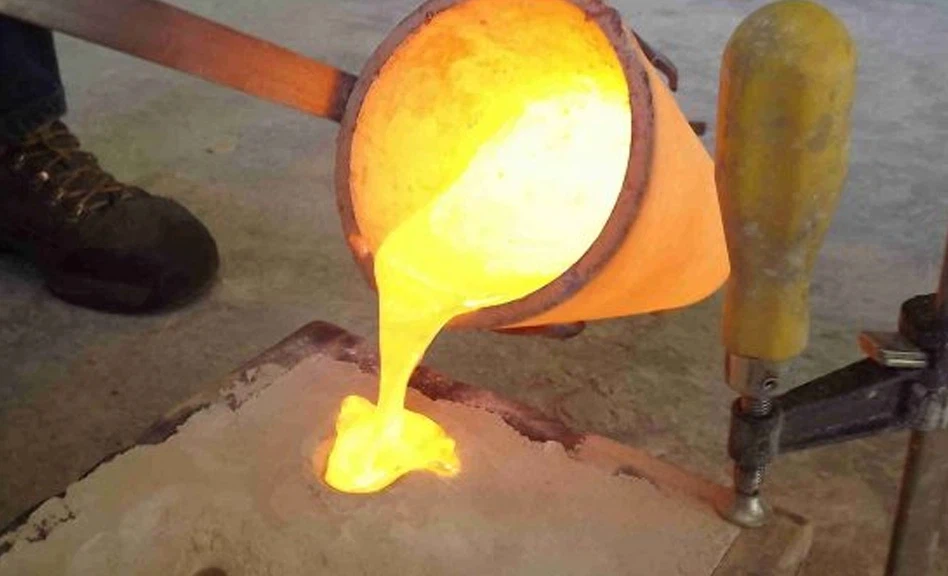
Forging is a manufacturing process that involves shaping metal using localized compressive forces. As a forging supplier, ensuring the quality of our forged products is of utmost importance. The forging inspection process is a series of steps designed to verify that the forged parts meet the required specifications and standards. In this blog post, I will delve into the details of the forging inspection process, highlighting its significance and the various stages involved.
Pre - Forging Inspection
Before the actual forging process begins, a thorough inspection of the raw materials is essential. This initial step sets the foundation for the quality of the final product.


Material Verification
We first check the material certificates provided by the raw material supplier. These certificates contain crucial information such as the chemical composition, mechanical properties, and heat treatment history of the metal. By comparing the certificate data with the requirements of the customer's specifications, we can ensure that the right material is being used. For example, if a customer requires a specific grade of steel with a certain carbon content for its strength and ductility, we must confirm that the incoming steel meets this criterion.
Visual Inspection of Raw Materials
A visual inspection of the raw materials is also carried out. We look for surface defects such as cracks, porosity, and inclusions. Cracks in the raw material can propagate during the forging process, leading to a defective part. Porosity, which is the presence of small holes in the metal, can weaken the part and affect its performance. Inclusions, which are foreign particles in the metal, can also cause problems in the forging and subsequent machining processes.
In - Process Inspection
During the forging process, in - process inspections are conducted at various stages to monitor the quality of the parts being forged.
Temperature Monitoring
Temperature is a critical factor in the forging process. Different metals have different optimal forging temperatures. For example, steel typically has a forging temperature range between 900°C and 1200°C. If the temperature is too low, the metal may not deform properly, leading to incomplete forging and internal stresses. If the temperature is too high, the metal may burn or oxidize, affecting its mechanical properties. We use thermocouples and infrared pyrometers to monitor the temperature of the metal during forging.
Dimensional Inspection
As the forging progresses, we measure the dimensions of the part at regular intervals. This is done using precision measuring tools such as calipers, micrometers, and coordinate measuring machines (CMMs). The dimensions of the forged part must be within the tolerance limits specified by the customer. Any deviation from these limits can result in a part that does not fit properly in the final assembly.
Visual Inspection of Forged Parts
Visual inspection is also carried out during the forging process. We look for surface defects such as cracks, folds, and laps. Cracks can occur due to excessive stress during forging, while folds and laps are caused by improper metal flow. These defects can significantly reduce the strength and durability of the forged part.
Post - Forging Inspection
After the forging process is complete, a comprehensive post - forging inspection is carried out to ensure that the final product meets all the requirements.
Non - Destructive Testing (NDT)
Non - destructive testing methods are used to detect internal defects in the forged parts without damaging them. Some common NDT methods include ultrasonic testing, magnetic particle testing, and radiographic testing.
- Ultrasonic Testing: Ultrasonic testing uses high - frequency sound waves to detect internal defects such as cracks, voids, and inclusions. The sound waves are transmitted into the metal, and any reflections from internal defects are detected and analyzed.
- Magnetic Particle Testing: Magnetic particle testing is used to detect surface and near - surface defects in ferromagnetic materials. A magnetic field is applied to the part, and magnetic particles are sprinkled on the surface. The particles will accumulate at the locations of defects, making them visible.
- Radiographic Testing: Radiographic testing uses X - rays or gamma rays to create an image of the internal structure of the part. This method can detect internal defects such as porosity, cracks, and inclusions.
Mechanical Testing
Mechanical testing is carried out to determine the mechanical properties of the forged part. This includes tests such as tensile testing, hardness testing, and impact testing.
- Tensile Testing: Tensile testing is used to determine the strength and ductility of the forged part. A sample of the part is pulled until it breaks, and the force required to break the sample is measured. The results of the tensile test can provide information about the ultimate tensile strength, yield strength, and elongation of the part.
- Hardness Testing: Hardness testing is used to measure the resistance of the forged part to indentation. There are several hardness testing methods, such as Brinell hardness testing, Rockwell hardness testing, and Vickers hardness testing. The hardness of the part is an important factor in determining its wear resistance and machinability.
- Impact Testing: Impact testing is used to determine the toughness of the forged part. A sample of the part is struck with a pendulum, and the energy absorbed by the sample is measured. The results of the impact test can provide information about the ability of the part to withstand sudden loads.
Final Visual Inspection
A final visual inspection is carried out to ensure that the forged part has a smooth surface finish and no visible defects. We also check for any signs of corrosion or damage that may have occurred during the inspection and testing process.
Different Types of Forging and Their Inspection Considerations
There are different types of forging processes, each with its own unique inspection requirements.
Cold Forging
Cold Forging is a process that is carried out at room temperature or slightly above. Cold - forged parts typically have high dimensional accuracy and good surface finish. However, the cold forging process can introduce high internal stresses in the part. During the inspection process, we pay special attention to the internal stress levels in cold - forged parts. X - ray diffraction or ultrasonic methods can be used to measure the internal stresses.
Open Die Forging
Open Die Forging involves shaping the metal between two flat or simple - shaped dies. Open - die forged parts are often used for large and custom - made components. The inspection of open - die forged parts focuses on the overall shape and dimensional accuracy, as well as the presence of any internal defects. Due to the nature of the open - die forging process, the parts may have some surface irregularities, which need to be carefully evaluated.
Closed Die Forging
Closed Die Forging is a process in which the metal is shaped between two dies that have the exact shape of the final part. Closed - die forged parts have high dimensional accuracy and complex shapes. During the inspection of closed - die forged parts, we pay close attention to the details of the shape and the quality of the die impressions. Any misalignment or wear of the dies can result in defective parts.
Importance of the Forging Inspection Process
The forging inspection process is crucial for several reasons. Firstly, it ensures that the forged parts meet the customer's specifications and standards. This is essential for the proper functioning of the final product. Secondly, it helps to identify and eliminate defective parts early in the production process, reducing the cost of rework and scrap. Thirdly, it provides confidence to the customers in the quality of our products, which is important for building long - term business relationships.
Conclusion
As a forging supplier, the forging inspection process is an integral part of our production. It involves a series of steps from pre - forging inspection to post - forging testing, ensuring that the forged parts meet the highest quality standards. By carefully monitoring and controlling the quality of our products, we can provide our customers with reliable and high - performance forged parts.
If you are in the market for high - quality forged parts, we would be delighted to discuss your requirements. Our team of experts can work with you to ensure that you get the best - suited forgings for your application. Contact us to start the procurement process and experience the difference in quality that our forging inspection process provides.
References
- ASM Handbook Volume 14A: Metalworking: Forging. ASM International.
- ISO 9001:2015 Quality management systems – Requirements. International Organization for Standardization.
- API 6A: Specification for Wellhead and Christmas Tree Equipment. American Petroleum Institute.